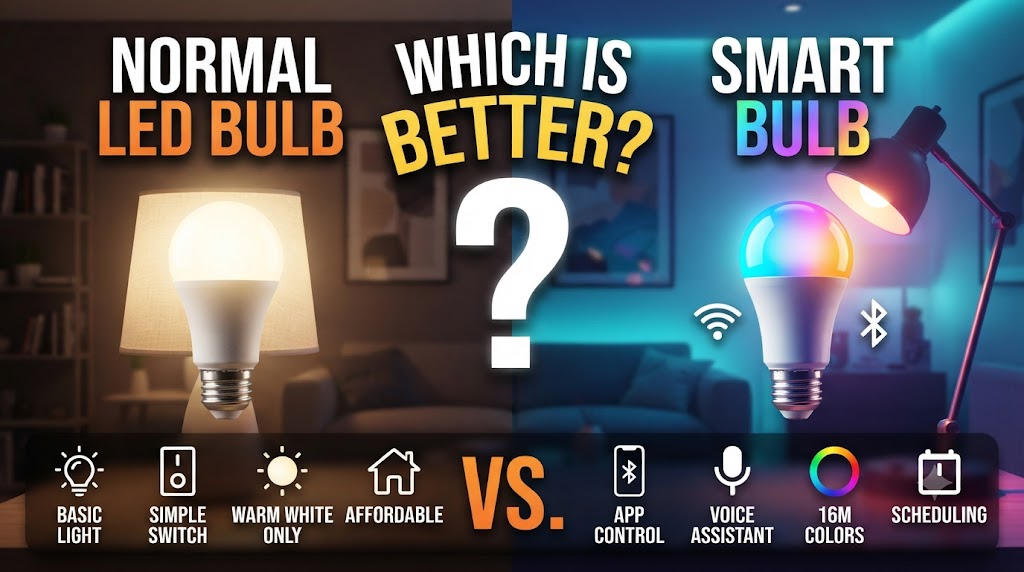
Smart Bulb vs Normal LED Bulb
A smart bulb and a normal LED bulb both provide energy-efficient lighting, but they are designed for different needs. A normal LED bulb mainly focuses on providing reliable light with simple operation through a regular wall switch. A smart bulb adds connected features such as app control, scheduling, dimming, and, depending on the model, voice control and integration with a smart home system. The better option depends on whether you want basic lighting or more control and automation.
A normal LED bulb is generally simpler to install and use because it works like a traditional bulb. A smart bulb usually needs a compatible app and a suitable wireless connection or smart-home ecosystem. Smart bulbs can offer more flexibility, but they also add features that may not be necessary for every room. Therefore, the right choice depends on your budget, usage, convenience, and interest in smart-home features.
Quick Comparison Table
| Feature | Smart Bulb | Normal LED Bulb |
|---|---|---|
| Basic lighting | Yes | Yes |
| App control | Usually available | No |
| Voice control | Often available | No |
| Dimming | Usually available | Depends on bulb |
| Scheduling | Yes | No |
| Automation | Yes | No |
| Installation | Slightly more setup | Very simple |
| Internet/Wi-Fi dependence | Depends on model | No |
| Cost | Usually higher | Usually lower |
| Best for | Smart homes and automation | Simple everyday lighting |
Smart Features
A smart bulb can be controlled through a smartphone app and, depending on the model, may also support voice commands and smart-home automation. You can use features such as schedules, timers, scenes, and remote control.
A normal LED bulb generally does not offer these connected features. You turn it on or off using the wall switch.
What this means: If you want lighting that can be controlled and automated digitally, the smart bulb has the advantage.
Winner: Smart Bulb
Ease of Use
A normal LED bulb is straightforward. Install it, switch it on, and use it. There is normally no app, account, pairing process, or smart-home setup involved.
A smart bulb can require additional setup. Depending on the model, you may need to connect it to an app, Wi-Fi, Bluetooth, or another smart-home system.
What this means: For simple everyday lighting, a normal LED bulb is easier.
Winner: Normal LED Bulb
Dimming and Lighting Control
Many smart bulbs allow brightness control through an app or compatible smart-home system. Some models may also offer adjustable colour temperature or different colours.
Normal LED bulbs can also support dimming, but only compatible dimmable bulbs can be used with suitable dimmer controls. Basic LED bulbs generally provide simpler lighting control.
What this means: If you want detailed control over brightness and lighting settings, a smart bulb is usually more flexible.
Winner: Smart Bulb
Automation and Scheduling
One of the biggest differences between a smart bulb and a normal LED bulb is automation.
A smart bulb can often be scheduled to turn on or off at specific times. Depending on the ecosystem and model, it can also work with other smart-home devices and routines.
A normal LED bulb does not normally provide this type of automatic control.
What this means: Smart bulbs are more useful when you want lights to follow a routine without manually operating the switch.
Winner: Smart Bulb
Installation and Setup
A normal LED bulb usually has a simple installation process. You fit it into the compatible socket and use the existing switch.
A smart bulb uses the same basic socket installation in many cases, but additional setup may be required through an app or smart-home system.
There can also be compatibility considerations depending on the smart bulb and your existing setup.
What this means: A normal LED bulb is the better choice when you want the simplest installation.
Winner: Normal LED Bulb
Cost
Normal LED bulbs are generally the more affordable option because they focus on basic lighting.
Smart bulbs cost more because they include additional electronics and connected features. The extra cost may be worthwhile if you regularly use app control, automation, scheduling, or other smart-home functions.
What this means: If your main goal is affordable everyday lighting, a normal LED bulb offers better value. If you will actually use smart features, the additional cost of a smart bulb can make sense.
Winner: Normal LED Bulb for basic lighting
Reliability and Dependence
A normal LED bulb does not normally depend on an internet connection, app, or smart-home platform. If electricity is available, you can operate it with the wall switch.
A smart bulb has additional technology and may depend on its specific connection method and ecosystem for some features. However, the exact behaviour during network or app problems depends on the individual model.
What this means: A normal LED bulb provides a simpler lighting setup with fewer points of dependence.
Winner: Normal LED Bulb
Which Is Better for Different Users?
Choose a Smart Bulb If:
- You want app-based lighting control.
- You want scheduling or automation.
- You want compatible voice-control features.
- You want adjustable brightness or other advanced lighting options.
- You are building a smart home.
Choose a Normal LED Bulb If:
- You only need reliable everyday lighting.
- You want a lower-cost option.
- You prefer simple installation and operation.
- You do not need app or voice control.
- You want lighting that works without smart-home features.
Smart Bulb vs Normal LED Bulb: Which Is Better?
There is no single winner for everyone.
A smart bulb is better for smart-home users who want automation, app control, scheduling, and more flexible lighting options.
A normal LED bulb is better for users who want simple, reliable, and generally more affordable lighting without additional smart features.
So, if you are upgrading your home into a smart home, choose a smart bulb. If you simply need a good everyday light, a normal LED bulb is the more practical choice.
Conclusion
The choice between a Smart Bulb vs Normal LED Bulb depends mainly on how much control you need. Smart bulbs offer more features and automation, while normal LED bulbs keep lighting simple and affordable. For basic lighting, a normal LED bulb is usually the practical choice. For connected lighting and smart-home automation, a smart bulb is the better option.
Primary Focus Keyphrase: Smart Bulb vs Normal LED Bulb
SEO Title: Smart Bulb vs Normal LED Bulb: Which Is Better?
Meta Description: Smart Bulb vs Normal LED Bulb comparison covering features, cost, control, automation, installation, and which option is better for different users.
URL Slug: smart-bulb-vs-normal-led-bulb
Disclaimer
Lighting features, compatibility, prices, and smart-home support can vary between models and may change over time. Check the latest specifications and compatibility information from the manufacturer before purchasing.